











If you have ever spent an evening agonising over whether to keep a one-land hand on the draw, or calculating the exact probability of top-decking a Lightning Bolt for lethal, you already possess a skillset that most people lack. Magic: The Gathering (MTG) players like to think of themselves as wizards casting spells. But in reality, we are statisticians. We are risk managers. We are experts in "Expected Value" (EV).
It is no coincidence that some of the world's most successful poker pros—like Jon Finkel, Eric Froehlich, and David Williams—started their careers tapping lands for mana before they started stacking chips. The transition from Trading Card Games (TCG) to the world of iGaming (Poker, Blackjack, and even Slots) is not just natural; it is almost inevitable.
But why? What is it about shuffling a 60-card deck that prepares your brain for the high-stakes environment of a casino? And more importantly, how can you apply your knowledge of the "combat phase" to beat the house edge? Let’s break down the mechanics.
The God of Variance (and Why You Already Know Him)
In Magic, we call it "mana screw" or "mana flood." In slots and gambling, they call it Volatility. The concept is identical.
Imagine you are playing a hyper-aggressive Red Deck Wins. Your game plan is fast, high-risk, and relies on a perfect opening hand. If you get it, you win on Turn 3. If you stumble, you lose. That is a High Volatility strategy. Now imagine playing a slow, grinding Control deck. You have answers for everything, you draw extra cards, and you win slowly by attrition. That is Low Volatility. Most casual gamblers walk into a casino and pick a game based on the pretty lights or the theme music. An MTG player walks in and looks at the mechanics.
- The "Control Deck" Gambler: These players gravitate towards Blackjack or Poker. They want to minimize luck and maximize skill. They want to grind out small advantages over a long session.
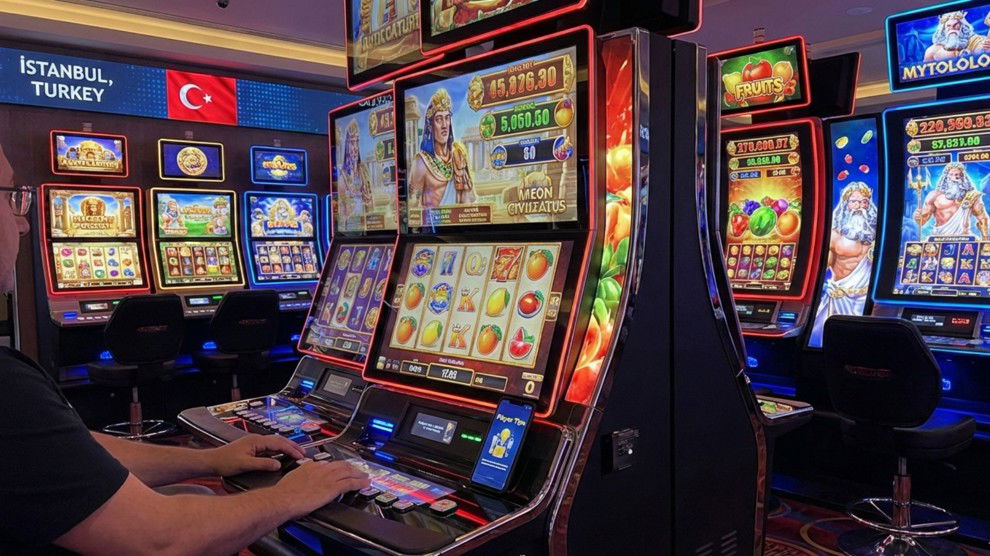
- The "Combo Deck" Gambler: These are the slot players. They are willing to endure a long string of losses (dead spins) for the statistical probability of hitting that one, massive, game-ending combination (the Jackpot).
Understanding this helps you choose your game. You wouldn’t bring a Limited deck to a Standard tournament. Similarly, you shouldn't play a High Volatility slot if your bankroll (mana pool) can’t support the variance.
RNG: The Ultimate Shuffle
In paper Magic, we shuffle our decks to randomise them. But we all know that feeling—suspicion. “Did I shuffle enough? Are the lands clumped?” In the digital world, there is no physical shuffling. There is the Random Number Generator (RNG).
This is a concept that Magic Arena players often complain about ("The shuffler is rigged!"), but iGaming players must respect as law. The RNG is the engine that decides every single outcome in a modern casino game, from the next card in Blackjack to the symbols on a reel. Here is the difference: In Magic, randomness is an obstacle to overcome. In gambling, randomness is the product. Smart players don’t fight the RNG; they analyze it. This is where the concept of RTP (Return to Player) comes in. Think of RTP as the "Power Level" of a deck.
- A deck with a 45% win rate is bad.
- A deck with a 55% win rate is Tier 1.
In slots, a game with 92% RTP is a "bad deck." A game with 97% RTP is "Tier 1." The problem is, casinos don't always print the RTP on the box. It’s like playing against an opponent who hides their decklist. This is where external resources become your sideboard. Serious players use databases like SlotsJuice.com to look up the "decklist" of a game before they play. They check the volatility and the RTP to ensure they aren't sitting down at a disadvantage. If you wouldn’t play a match without knowing the meta, why would you bet money without knowing the math?
Expected Value (EV): The Only Metric That Matters
Every time you make a decision in Magic, you are unconsciously calculating EV.
- “If I attack with everything, he has a 10% chance of having Settle the Wreckage. If he has it, I lose. If he doesn't, I win. Is the risk worth the reward?”
This is the exact same logic used in Poker and Advantage Play. The "House Edge" exists to ensure the casino has a positive EV. But skilled players look for spots where the EV shifts.
- Bonuses are "Free Spells": When an online casino offers a "100% Match Bonus," an MTG player sees it as casting Ancestral Recall—getting three cards for the price of one. If you deposit $100 and get $100 free, your EV just skyrocketed.
- Bluffing is just "Holding Priority": In Poker, bluffing isn't about lying. It's about representing a threat. It’s leaving two Blue mana open even if you don’t have a Counterspell in hand. Your opponent has to respect the possibility.
Tilt Management: The Mental Game
We have all seen it at Friday Night Magic. A player gets mana @@@@ two games in a row, slams their deck on the table, and starts playing terribly in the next match because they are angry. This is called Tilt. In Magic, tilting costs you a booster pack. In gambling, tilting costs you your rent. Gamers actually have a massive advantage here. We are used to losing. Even the best MTG player in the world loses about 35-40% of their matches. We learn to accept that sometimes, you make the mathematically correct play and still lose.
- You block correctly, but they have the combat trick.
- You bet big on a pair of Aces, but they hit a flush on the river.
The non-gamer takes this personally. They think the machine is "cheating" or they are "unlucky." The gamer shrugs, shuffles up, and realizes that it was just variance. This emotional detachment is a superpower in a casino.
The "Meta" of Slots
Believe it or not, slot machines have a "Metagame" too. Just like certain decks dominate Standard for a few months before rotating out, certain slot mechanics dominate the casino floor.
- 2010s Meta: Simple, 5-line games (like Mono-Red Aggro).
- 2020s Meta: "Megaways" mechanics with 117,649 ways to win (like a complex Combo deck).
- Current Meta: "Crash Games" and High Volatility "Bonus Buys."
The modern player—the one raised on video games and Twitch streams—demands more complexity. They don't want to just pull a lever. They want interactivity. They want to "buy the feature" (skip to the boss fight). This shift is driven by the gamer demographic. Developers know that people who grew up optimizing DPS (Damage Per Second) in WoW or building mana curves in MTG find traditional slots boring. They are building games now that require a deeper understanding of mechanics.
Conclusion: Play the Game, Don't Let it Play You
So, should every Magic player quit their job and become a professional gambler? Absolutely not. The House Edge is a formidable opponent—much tougher than any localized meta. But the next time you find yourself in a casino, online or offline, don't feel out of place. You have the tools.
- You understand Volatility (Aggro vs. Control).
- You respect the RNG (The Shuffle).
- You calculate EV (Risk vs. Reward).
- You research the RTP (The Decklist) using tools like SlotsJuice.com.
You aren't just gambling. You are piloting a deck. And if you play your cards right, you might just find that the skills you learned at the kitchen table pay off in ways you never expected. Good luck, and may you always draw running lands.


 Sign in and join the conversation
— Comments 0
, Reactions 1
Be the first to comment